 Business License

Criteria for Evaluating the Cost-Effectiveness of Saw Blade Lifespan: Avoid Wasting Money
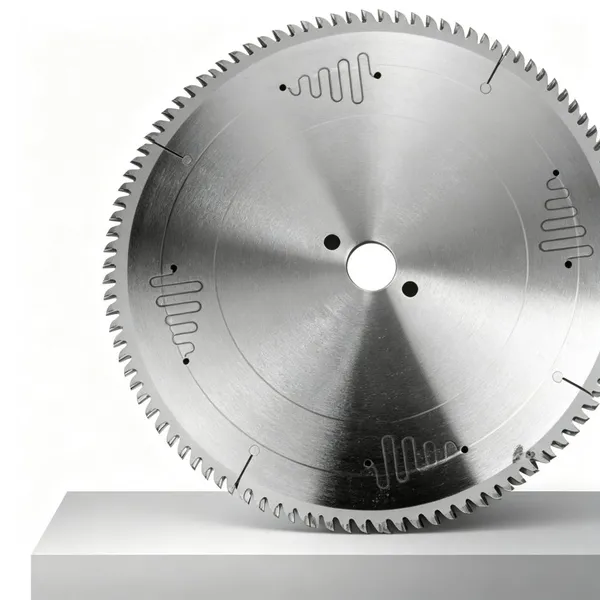
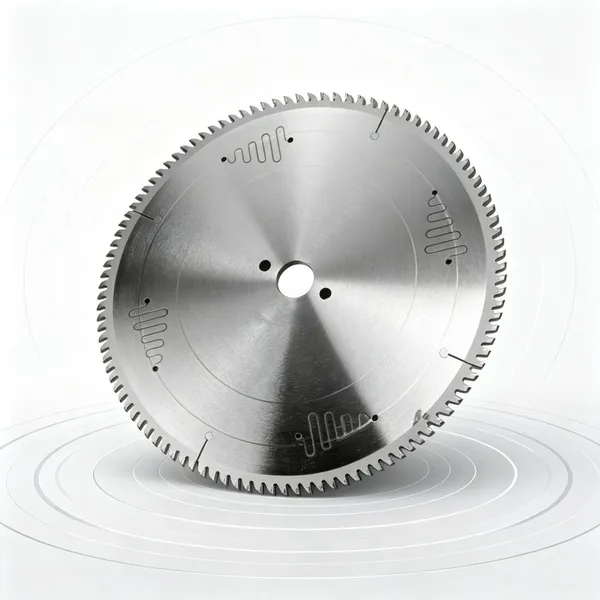
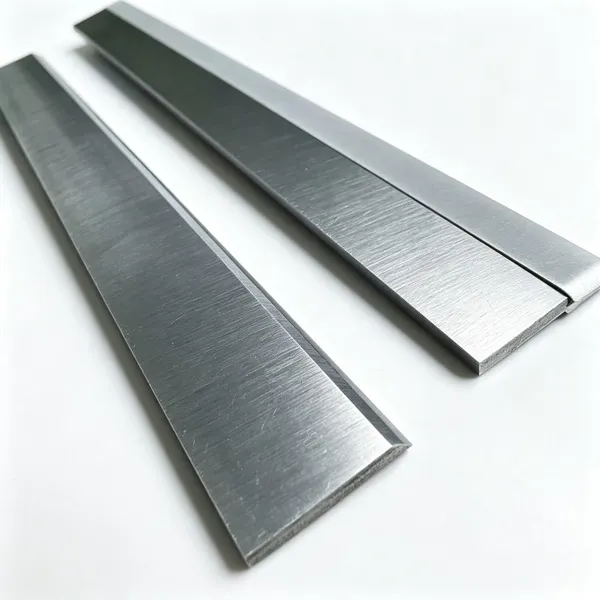
Owners of woodworking shops, aluminum door and window manufacturers, furniture makers, and whole-home customization professionals all know this: saw blades that wear out quickly and require frequent replacement not only drive up procurement costs but also cause unplanned production line downtime, delaying delivery schedules. Today, we’re sharing five practical tips used by seasoned factory veterans. Without changing your equipment, you can double the lifespan of your woodworking-specific alloy saw blades and imported alloy circular saw blades—and you can put these tips into practice the very same day.
Many people assume that saw blades don’t last because they’re too cheap, but in 90% of cases, the issue is actually improper usage: mismatched tooth profiles and cutting materials, incorrect feed rates, uneven installation, and failure to sharpen them in a timely manner. These mistakes will cause even imported saw blades to wear out quickly.
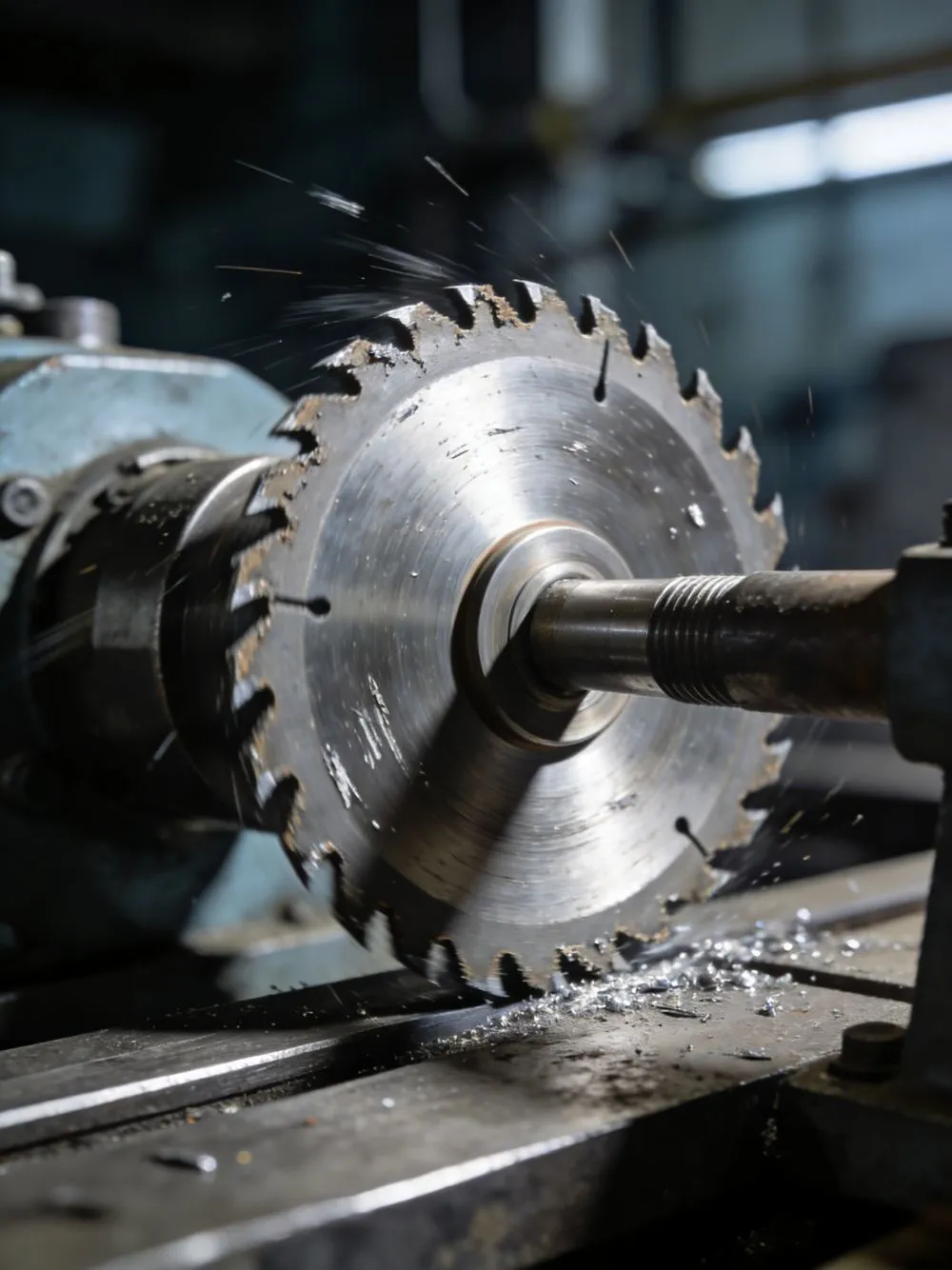

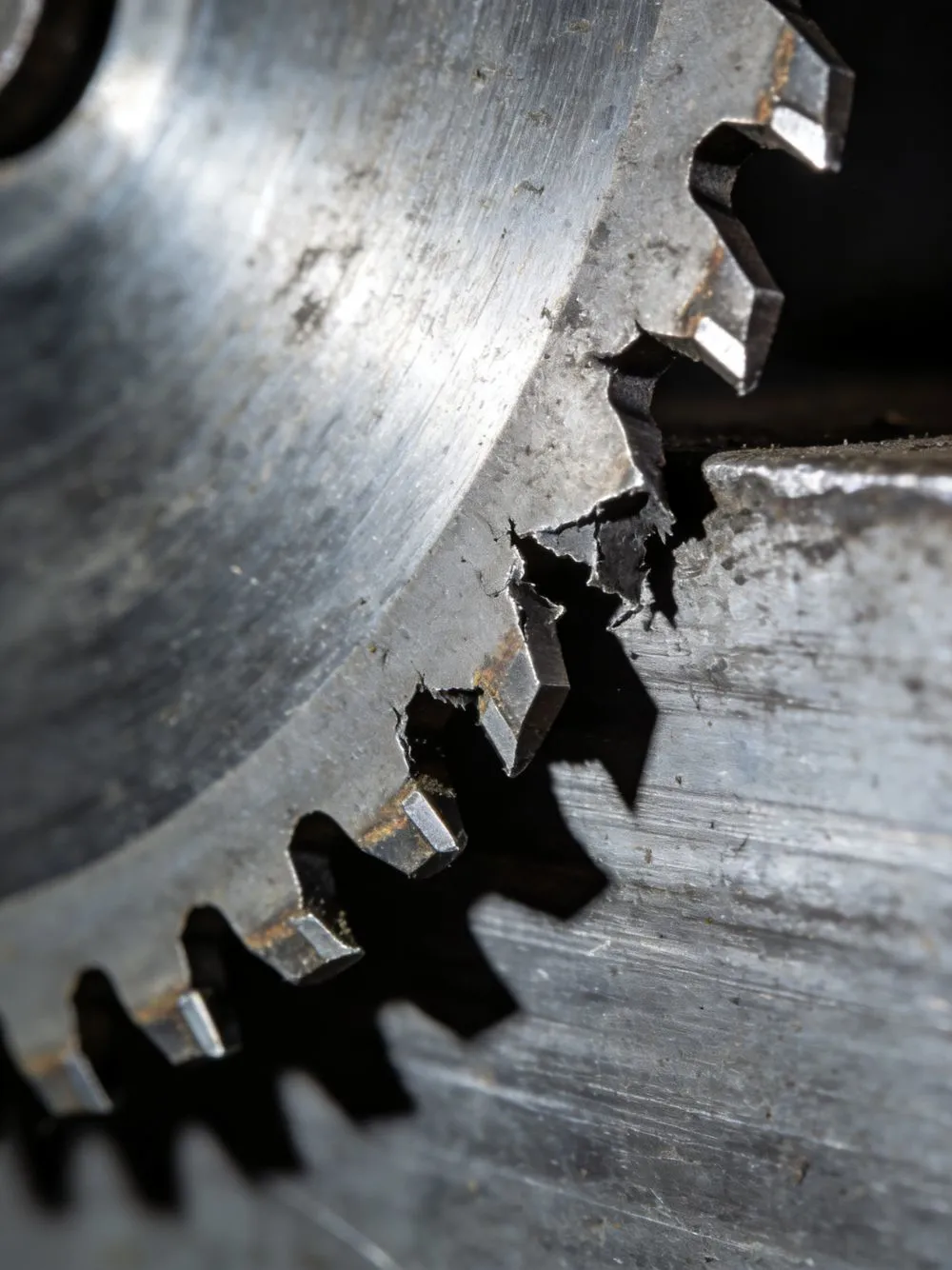
Tip 1: Matching the correct tooth profile is key to extending blade life
Specific steps: First, identify the material, thickness, and hardness of the workpiece. Then, select the appropriate tooth profile. Never use a single blade for cutting different materials. Before cutting, verify that the blade’s tooth profile is suitable for the workpiece. Prioritize using blades specifically labeled by the manufacturer for the intended material.
Core Parameter Standards:
1. Cutting solid wood/plywood/MDF: Use alternate-tooth (ATB) blades with a tooth tip rake angle of 15°–20°. Use fine teeth for thin boards and coarse teeth for thick boards. Ensure the board thickness is at least three times the tooth pitch to prevent the saw from jamming;
2. Cutting aluminum alloys, copper, and other non-ferrous metals: Select trapezoidal-flat (TCG) teeth, with a height difference of 0.1–0.15 mm between trapezoidal and flat teeth, and a tooth tip rake angle of 5°–10°. Never use woodworking tooth profiles to cut aluminum;
3. Cutting steel, profiles, and ferrous metals: Select negative rake angle flat teeth or trapezoidal-flat teeth, with a tooth tip rake angle of -5° to -10°, and pair with low-speed, high-rigidity equipment.
Expected Results: Correctly matching the tooth profile can directly reduce abnormal tooth tip chipping and one-sided wear by over 30%, increase the saw blade’s basic service life by 40%–60%, and improve the surface finish of the cut by two grades, eliminating burrs and chipped edges while reducing the scrap rate of workpieces.
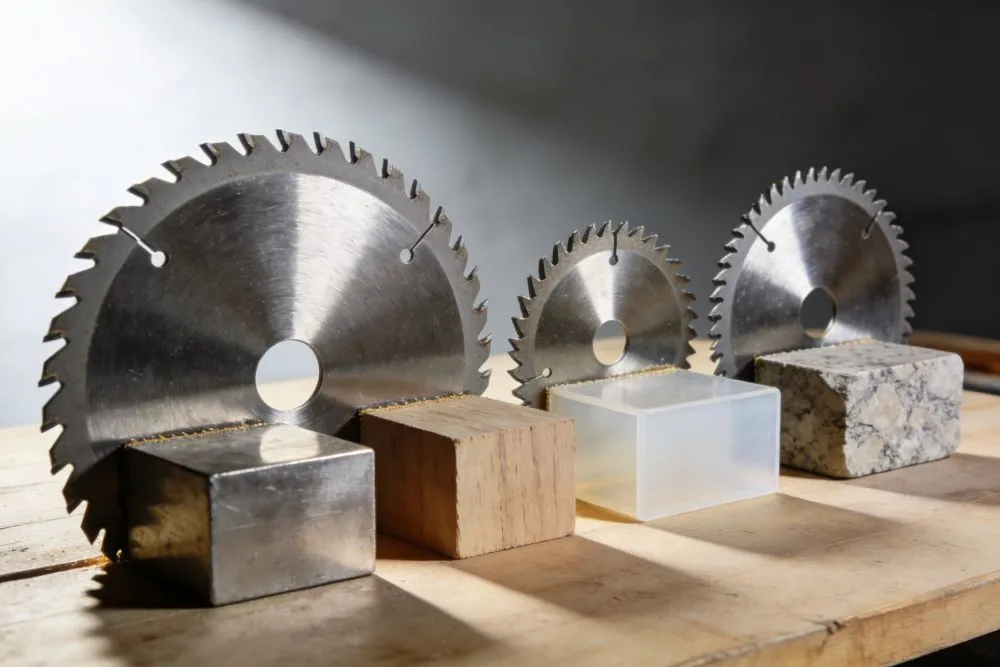
Tip 2: Optimize Feed Rate and Cutting Parameters
Specific Operating Procedures: Based on the saw blade diameter, number of teeth, and cutting material, precisely match the machine’s spindle speed and feed rate. Strictly avoid over-speeding, forced feeding, or cutting under heavy load. Monitor the machine’s load in real-time during cutting; if abnormal noises, vibrations, or smoke occur, immediately shut down the machine and adjust the parameters.
Core Parameter Standards (Industry-Standard Benchmarks):
1. Ø250mm carbide-tipped saw blade, solid wood cutting: Spindle speed 3000–4000 rpm, feed rate 3–8 m/min; 2. Ø250mm carbide-tipped saw blade, aluminum alloy profile cutting: Spindle speed 2000–3000 rpm, feed rate 2–5 m/min;
3. Ø250mm carbide-tipped saw blade, steel profile cutting: Spindle speed 1000–1800 rpm, feed rate 0.5–2 m/min;
4. General guidelines: Single-pass cutting depth should not exceed 2/3 of the saw blade tooth height, and spindle load current should not exceed 80% of the equipment’s rated value.
Expected Results: After optimizing these parameters, saw blade overheating and annealing, as well as rapid tooth tip dulling, can be completely prevented. Saw blade service life will increase by more than 50%, while cutting accuracy can be maintained within ±0.1 mm. Equipment load will be reduced by 20%, minimizing long-term motor wear.

Tip 3: Standardize Installation Procedures to Prevent Vibration-Induced Wear
Specific Procedures: Before installation, inspect the saw blade body for cracks or deformation, and ensure the flange is flat, free of debris, and undamaged. Strictly follow the equipment manual for installation; never use deformed flanges, uneven shims, or force the tightening of bolts. After installation, conduct an idle test; cutting operations may only commence after passing this test.
Core Parameter Standards:
1. The flange diameter must be ≥ 1/3 of the saw blade diameter (e.g., for a Ø300mm saw blade, the flange diameter must be ≥ 100mm). The inner and outer flanges must be of equal diameter and parallel, with a surface flatness tolerance of ≤0.02mm;
2. Bolt tightening torque: 25–30 N·m for M10 bolts, 35–40 N·m for M12 bolts; excessive tightening is strictly prohibited;
3. Idling acceptance criteria: No vibration or abnormal noise during 30 seconds of idling; using a dial indicator, the circular runout of the saw blade end face must be ≤0.05 mm, and the radial runout must be ≤0.03 mm.
Expected Results: Proper installation can eliminate over 90% of abnormal vibration-induced wear, one-sided wear, and deformation of the saw blade body. It prevents “flared-out” blade failure, extends service life by over 35%, and significantly improves cutting safety by eliminating the risk of flying or chipping saw teeth.
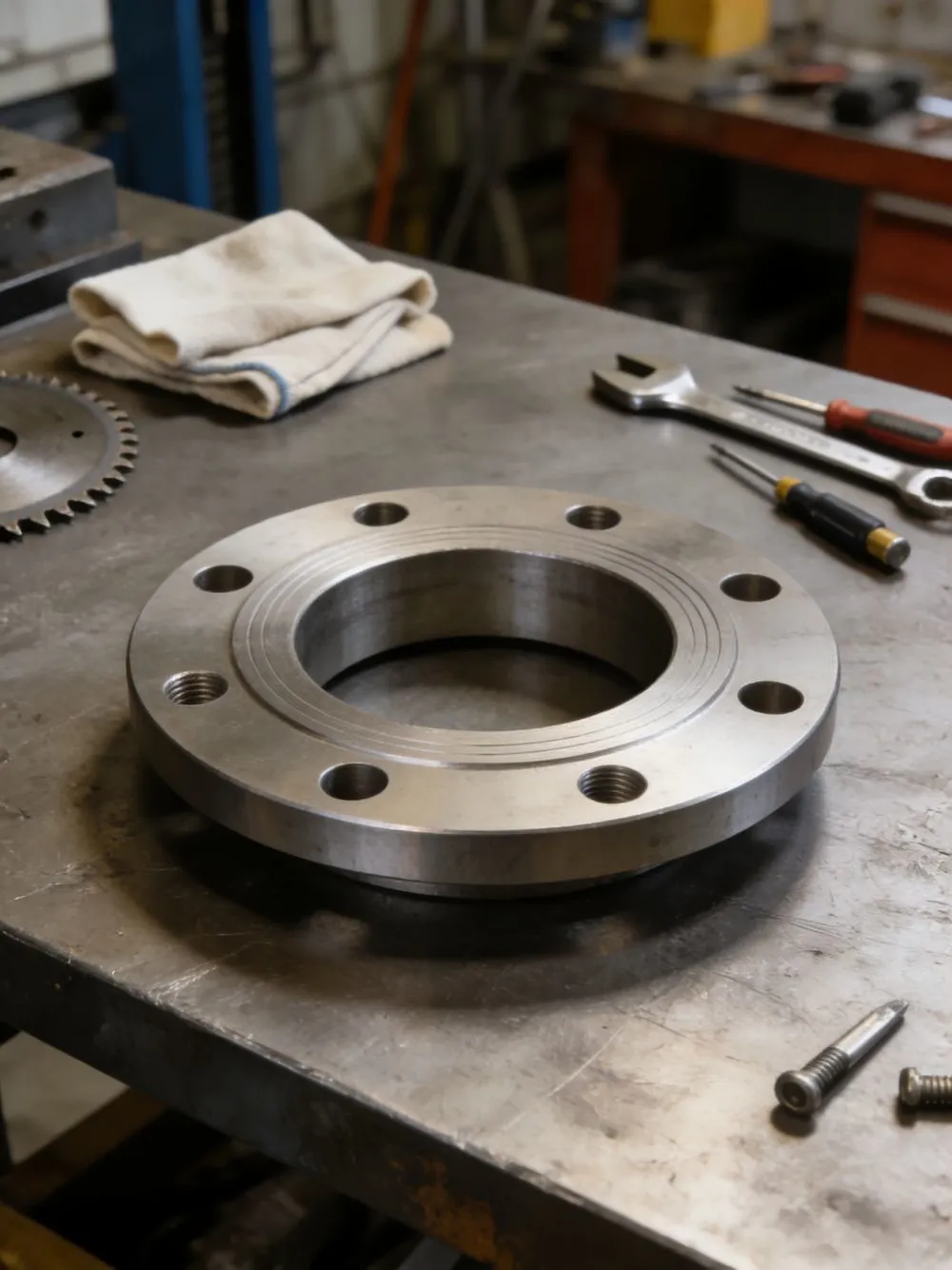


Tip 4: Perform Daily Cleaning and Maintenance
Specific Procedures: Immediately after each cutting operation, clean resin, metal shavings, wood chips, and oil residue from the saw blade’s tooth grooves and flange contact surfaces. Apply rust-proofing treatment before long-term storage. Never use strong acids or alkalis for cleaning, strike the tooth tips violently, or use high-temperature flames to remove contaminants.
Core Procedures & Parameter Standards:
1. Daily Cleaning: Clean with a soft-bristle brush and a neutral detergent (kerosene or specialized saw blade cleaner). After cleaning, wipe dry with a clean cloth and apply a thin coat of rust-preventive oil;
2. Storage Requirements: Store vertically on a dry, well-ventilated rack. Do not lay flat, stack, or subject to pressure from heavy objects. Store in an environment with humidity ≤60%, away from acidic or alkaline corrosive environments;
3. Strict Prohibitions: Do not use wire brushes to scrub the tooth tips. Do not use fire or high-temperature baking to remove accumulated debris (this will cause annealing of the tooth tips and irreversible deformation of the base material).
Expected Results: Proper daily maintenance prevents saw jamming and tooth chipping caused by debris buildup in the tooth slots, eliminates base material rust and tooth tip corrosion/dulling, extends the saw blade’s stable service life by 30%, and extends the rust-free storage period from 3 months to over 12 months, ensuring no rust or deformation.
Tip 5: Timely Professional Sharpening to Avoid Irreversible Damage
Specific Procedure: When the saw blade exhibits increased burrs on the cut surface, increased feed resistance, elevated equipment load, abnormal cutting noises, or a blunted rounding of 0.2 mm or more at the tooth tips, immediately shut down the machine and send it to a professional facility for precision regrinding using a diamond grinding wheel; manual grinding, non-professional regrinding, and forcing a dull saw to cut are strictly prohibited.
Key Parameters & Standards:
1. Sharpening Specifications: Both the front and back angles of the tooth tips must be ground simultaneously. The grinding allowance per sharpening session must not exceed 0.15 mm, ensuring that the height difference among all tooth tips is ≤0.02 mm and the deviation of the tooth tip angle from the original factory design is ≤±1°;
2. Re-grinding Limit: High-quality carbide saw blades can be re-ground 5–8 times in accordance with specifications. When the remaining carbide tooth thickness falls below one-third of the original thickness, cease re-grinding and replace the blade;
3. Strict Prohibitions: It is strictly prohibited to grind only the rake angle without grinding the clearance angle. It is also strictly prohibited to perform excessive grinding in a single session, as this may cause carbide teeth to anneal or fracture.
Expected Results: Timely and proper regrinding can restore over 95% of the blade’s original cutting performance, extending the total service life of a single blade by 2–3 times. This significantly reduces production material costs while preventing equipment damage and batch scrap caused by forced cutting with a dull blade. [Red and Black List of Pitfalls]
❌ 3 Absolute No-Nos That Shorten Saw Blade Lifespan
1. Using the same saw blade to cut all materials, regardless of hardness or thickness
2. Improper blade installation causing vibration during cutting and uneven tooth wear
3. Waiting until the teeth are completely worn down before resharpening—by this point, the blade has sustained irreversible damage
✅ 3 Good Habits to Extend Blade Life
1. Before each cut, check that the saw blade is installed flat and secure
2. Clean resin and metal debris from the blade surface after each use
3. Have the blade professionally sharpened promptly when the teeth wear down to 0.2mm
【Product Recommendations】
If you’re looking for a high-wear-resistant alloy blade suitable for cutting stainless steel, our woodworking-specific alloy blades and imported alloy circular saw blades are specifically optimized to address the issues mentioned above:
- Imported alloy cutting teeth
- Trapezoidal teeth with negative rake angle design
- Anti-adhesive, high-temperature resistant coating
- 40% increase in wear resistance
- Efficient cutting
- High cutting precision
- Customization available
Extending the service life of woodworking-specific alloy saw blades and imported alloy circular saw blades has never been about buying the most expensive blades, but rather about choosing the right product for the job, using the correct operating methods, and performing proper daily maintenance.
If you’re unsure which saw blade to choose for your specific cutting application, or if you’re struggling with issues like chipping or short blade life, leave a comment below with your cutting material and thickness, and I’ll provide you with free, one-on-one product selection advice.
FAQ
Q: How often should a saw blade be sharpened?
A: Under normal conditions, sharpening is needed when the blade makes unusual noises during cutting, the cut surface becomes rough, or chipping occurs. For routine batch cutting, we recommend sharpening when the cutting edge wears down by 0.2mm—don’t wait until it’s completely worn out.
Q: What type of saw blade is best for cutting stainless steel?
A: For cutting 304/316 stainless steel, prioritize carbide saw blades with trapezoidal-conical (TCG) teeth, a negative rake angle, and an anti-gluing coating. These features effectively reduce blade sticking, chipping, and tooth wear.
Recently Posted
-
How to Extend the Service Life of Your Aluminium Cutting Saw Blade
July 8, 2026An aluminium cutting saw blade is an investment. A quality TCT blade with TP teeth costs more than a wood-cutting blade — and it s Read More
 -
100T vs 120T Aluminium Saw Blade — Which Tooth Count Do You Need?
July 8, 2026Buying an aluminium cutting saw blade and stuck between 100T and 120T? This is one of the most common questions we get from buyers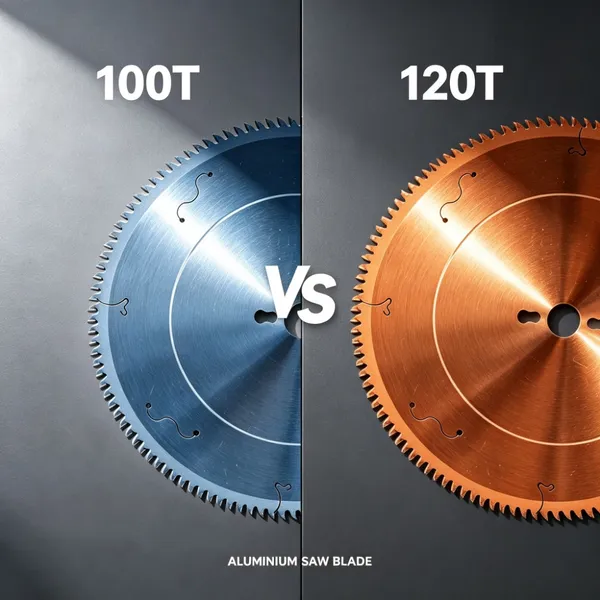 Read More
 -
Why Choose 254mm 100T TCG 75Cr1 Saw Blade for Wood Fine Cutting?
June 10, 2026Every woodworker knows that fine cutting is the key to finishing high-quality woodworks. A poor saw blade will cause rough edges, Read More
 -
254mm 100T TCG 75Cr1 Woodworking Blade: Ideal Choice for Wood Fine Cutting
June 10, 2026When it comes to high-precision wood processing, selecting a qualified saw blade directly determines cutting quality, production e Read More

Contact Us
Recommended Products
-
 75Cr1 Panel Saw Blade 180mm 48T ATB for Wood Panel Cutting for FurnitureNegotiableMOQ: 100 Pieces
 -
Woodworking Blade 350mm 60T TCG 75Cr1 for Panel Saw for Furniture ManufacturingNegotiableMOQ: 100 Pieces
-
Precision Cutting Blade 300mm With 96T TCG Teeth for Fine Panel Cutting for Cabinet MakingNegotiableMOQ: 100 Pieces
-
Industrial Saw Blade 450mm 80T TCG 75Cr1 for Panel Cutting for Furniture ManufacturingNegotiableMOQ: 100 Pieces
-
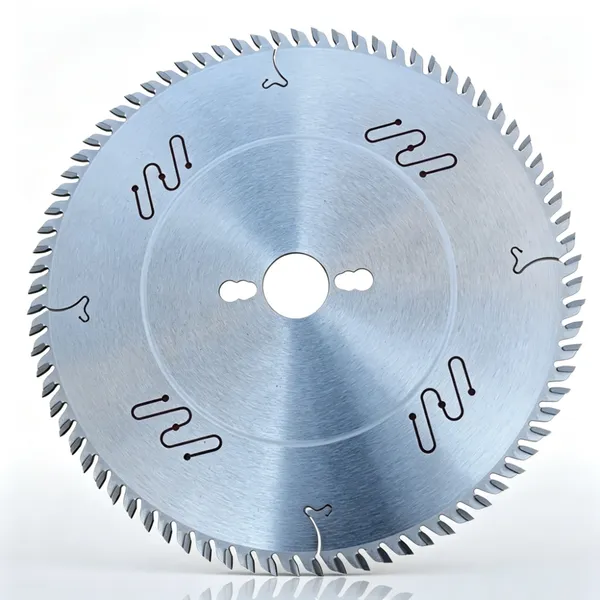
Laminated Board Cutting Blade 254mm 120T TCG 75Cr1 for Furniture ManufacturingNegotiableMOQ: 100 Pieces
-
230mm 40T ATB Rip Saw Blade for Solid Wood Cutting for Furniture 75Cr1NegotiableMOQ: 100 Pieces
-
Precision Saw Blade 254mm With 80T TCG Teeth for Plywood Cutting for Cabinet MakingNegotiableMOQ: 100 Pieces
-
75Cr1 Fine Cutting Blade 305mm 120T TCG for Panel Saw for FurnitureNegotiableMOQ: 100 Pieces
-
Melamine Board Blade for Panel Cutting 305mm 100T TCG 75Cr1 for FurnitureNegotiableMOQ: 100 Pieces
-
Woodworking Saw Blade 400mm With 100T TCG Teeth for Fine Panel Cutting for Cabinet MakingNegotiableMOQ: 100 Pieces
-
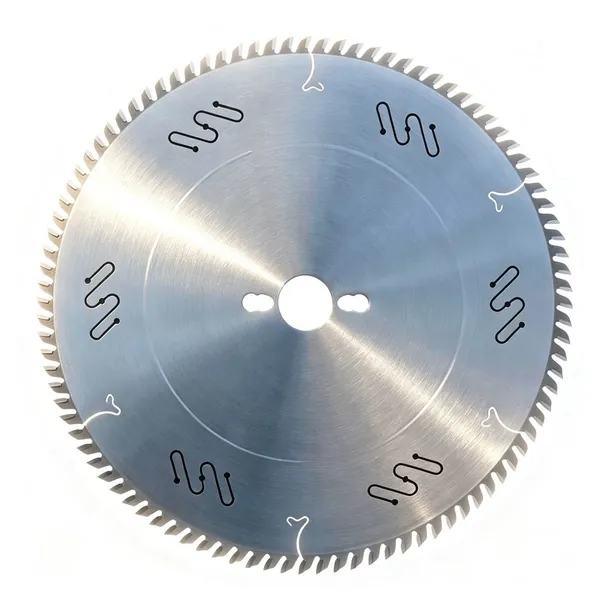
Cutting Saw Blade 350mm 60T TCG 75Cr1 for Panel Cutting for WoodworkingNegotiableMOQ: 100 Pieces
-
350mm 72T TCG Fine Cutting Blade for Panel Saw for Cabinet Making 75Cr1NegotiableMOQ: 100 Pieces
-
Panel Saw Blade for Wood Cutting 250mm 60T TCG 75Cr1 for MDF Crosscutting for WoodworkingNegotiableMOQ: 100 Pieces
-
Precision Wood Saw Blade 300mm 120T TCG for Fine Panel Crosscutting for Cabinet MakingNegotiableMOQ: 100 Pieces
-
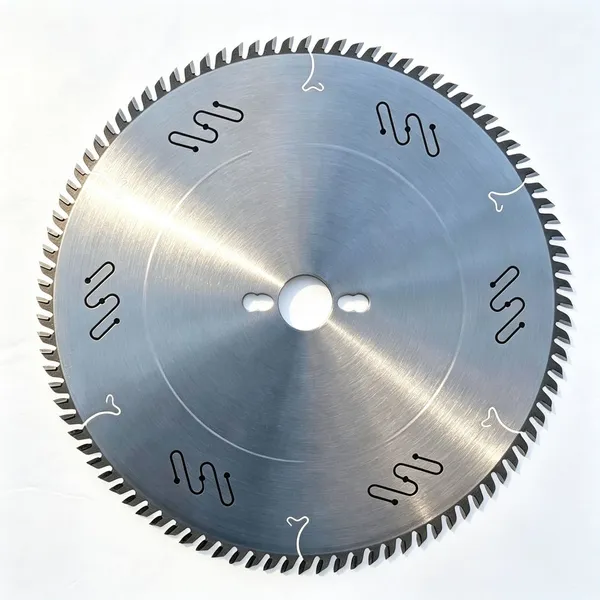
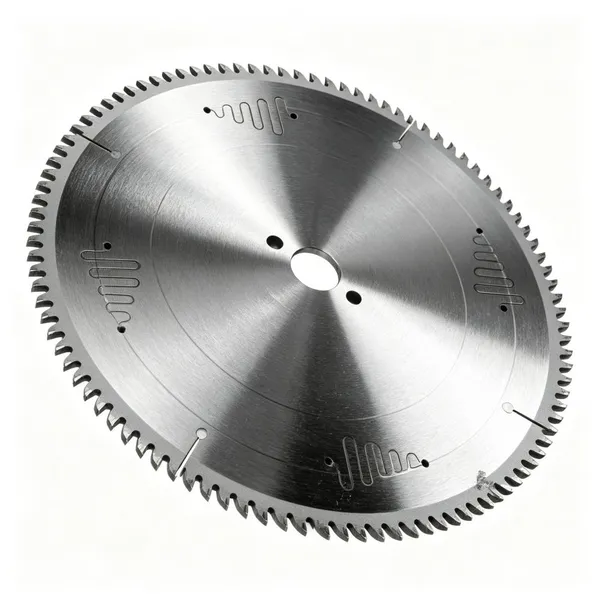
75Cr1 Wood Ripping Saw Blade 250mm 40T ATB for Solid Wood Rip Cutting for Timber ProcessingNegotiableMOQ: 100 Pieces
-
300mm 80T TCG Wood Saw Blade for Melamine Faced Board Cutting 75Cr1NegotiableMOQ: 100 Pieces
-
Plywood Saw Blade 300mm 60T TCG 75Cr1 for Woodworking Panel CrosscuttingNegotiableMOQ: 100 Pieces
-
75Cr1 Saw Blade 250mm 100T TP for Plywood Cutting - AOMJNGNegotiableMOQ: 100 Pieces
-
75Cr1 Panel Saw Blade 400mm 120T TP for Plywood Cutting - AOMJNGNegotiableMOQ: 100 Pieces
-
Cutting Saw Blade for Plywood No-spec HSS for Woodworking & FurnitureNegotiableMOQ: 100 Pieces