 Business License

How to Choose the Right Band Saw Blade for Wood Cutting
Choosing the right band saw blade is one of the most critical decisions in woodworking. The wrong blade can result in poor cut quality, wasted material, frequent blade breakage, and frustrating production delays. Whether you're a furniture manufacturer, sawmill operator, or woodworking enthusiast, understanding how to select the optimal band saw blade will save you time, money, and materials. This comprehensive guide covers everything you need to know about band saw blade selection for wood cutting applications.
What is a Band Saw Blade?
A band saw blade is a continuous loop of flexible metal with teeth cut into one or both edges. Unlike circular saw blades that rotate on an arbor, band saw blades travel around two or more wheels, creating a continuous cutting action. This design offers several unique advantages:
Thin kerf: Band saws remove less material than circular saws, maximizing yield
Versatility: Can make straight cuts, curves, and resaw cuts
Safety: The blade only cuts when moving downward toward the table
Material efficiency: Ideal for resawing valuable hardwoods
For wood cutting, band saw blades are typically made from carbon steel, bi-metal construction, or premium alloys like 75Cr1 steel, each offering different performance characteristics.
Understanding Blade Material Options
The material of your band saw blade directly impacts cutting performance, blade life, and operating costs. Here's a detailed comparison:
Carbon Steel Blades
Carbon steel blades are the most economical option, made from a single piece of high-carbon steel throughout.
Characteristics:
Most affordable blade type
Good for soft woods and light-duty applications
Flexibility allows for tight radius cutting
Blade life: 1-4 hours of cutting time
Best Applications:
Hobbyist woodworking
Cutting softwoods (pine, spruce, cedar)
Making curved cuts and intricate shapes
Occasional use applications
Limitations:
Loses edge quickly on hardwoods
Not suitable for production environments
Heat buildup reduces blade life significantly
Bi-Metal Blades
Bi-metal blades combine two different materials: a flexible spring steel back and hardened high-speed steel teeth welded together.
Characteristics:
Flexibility of carbon steel with hardness of HSS teeth
Resists breakage better than carbon steel
Blade life: 4-10 hours of cutting time
Good balance of cost and performance
Best Applications:
General woodworking shops
Mixed material cutting
Professional furniture making
Medium production environments
Advantages:
Versatile for various cutting tasks
Resists fatigue and breakage
Good value for professional use
75Cr1 Steel Blades
75Cr1 is a premium high-carbon alloy steel specifically engineered for cutting tool applications, offering an optimal balance of hardness, toughness, and wear resistance.
Characteristics:
Excellent edge retention
Superior fatigue resistance
Good wear resistance
Blade life: 10-20+ hours of cutting time
Industrial-grade performance
Best Applications:
Professional furniture manufacturing
Sawmill operations
High-volume production environments
Hardwood cutting applications
Advantages:
Extended blade life reduces replacement frequency
Consistent cutting performance over blade life
Suitable for continuous operation
Cost-effective for high-volume cutting
Why 75Cr1 is Preferred for Professional Applications:
The 75Cr1 designation refers to the steel composition:
0.75% Carbon: Provides excellent hardness and edge retention
1% Chromium: Enhances hardenability and corrosion resistance
This combination creates a blade that maintains sharpness longer, resists fatigue from repeated flexing, and delivers consistent performance in demanding production environments.
Carbide-Tipped Blades
Carbide-tipped blades feature teeth made from tungsten carbide, one of the hardest materials available for cutting tools.
Characteristics:
Extremely hard cutting edges
Longest blade life (20-50+ hours)
Highest initial cost
Best for high-volume production
Best Applications:
Large-scale furniture manufacturing
High-volume sawmill operations
Cutting abrasive materials
Applications where downtime is costly
Considerations:
Higher initial investment
Requires proper machine setup
Less forgiving of operator errors
Best value when blade life exceeds production value
Decoding Blade Specifications
Understanding blade specifications is essential for selecting the right blade for your application.
Blade Length
Blade length must match your band saw machine specifications exactly. Common lengths include:
| Machine Type | Typical Length Range |
|---|---|
| Benchtop band saws | 1000-2000mm |
| Floor-standing band saws | 2000-3500mm |
| Industrial band saws | 3500-8000mm+ |
Important: Never attempt to use a blade that doesn't match your machine's specified length. Incorrect blade length causes tracking problems and premature blade failure.
Blade Width
Blade width determines cutting capability:
Narrow Blades (6-13mm)
Best for tight radius curves
Minimum radius: Approximately equal to blade width
Ideal for intricate scrollwork and furniture details
Limited stability for straight cuts
Medium Blades (15-20mm)
Good general-purpose width
Balanced curve cutting and straight cutting ability
Most versatile for woodworking shops
Suitable for most furniture components
Wide Blades (25mm+)
Maximum stability for straight cuts
Best for resawing thick stock
Excellent for ripping operations
Cannot make tight curves
Selection Guide:
| Primary Cutting Task | Recommended Width |
|---|---|
| Intricate curves, scrollwork | 6-10mm |
| Furniture components, moderate curves | 10-15mm |
| General purpose, mixed cutting | 15-20mm |
| Straight cuts, ripping | 20-25mm |
| Resawing thick stock | 25mm+ |
Blade Thickness
Blade thickness affects both cutting performance and blade life:
Thin Blades (0.4-0.6mm)
Minimum kerf loss
Ideal for valuable hardwoods
Require careful tensioning
Less stable, may wander on long cuts
Standard Blades (0.6-0.9mm)
Good balance of stability and kerf loss
Suitable for most applications
Compatible with most band saws
Recommended for general woodworking
Thick Blades (0.9mm+)
Maximum stability
Best for heavy-duty cutting
More kerf loss
Require machines with adequate power
Kerf Considerations:
Kerf (the width of material removed by the blade) directly affects material yield. A 0.9mm kerf blade removes less material than a 1.2mm kerf blade, which adds up significantly when cutting expensive hardwoods.
Example Calculation:
Cutting 100 boards from a log
0.9mm kerf: Approximately 90mm total material loss
1.2mm kerf: Approximately 120mm total material loss
Difference: 30mm of valuable material saved
Understanding TPI (Teeth Per Inch)
TPI is one of the most important factors in blade selection, affecting both cut quality and cutting speed.
How TPI Affects Cutting
Lower TPI (2-4 teeth per inch)
Larger teeth with deeper gullets
Faster material removal
Rougher cut surface
Better chip clearance
Best for thick materials
Higher TPI (6-14 teeth per inch)
Smaller teeth with shallower gullets
Slower material removal
Smoother cut surface
Finer chips
Best for thinner materials
The 3-to-7 Rule
A general guideline for TPI selection: At least 3 teeth should be in the material at all times, but no more than 7.
Why This Matters:
Too few teeth: Teeth can catch and rip the material, causing rough cuts
Too many teeth: Gullets fill with sawdust before exiting the cut, causing burning and blade wear
Practical Application:
| Material Thickness | Recommended TPI |
|---|---|
| 100mm+ (4"+) | 2-3 TPI |
| 50-100mm (2-4") | 3-4 TPI |
| 25-50mm (1-2") | 4-6 TPI |
| 12-25mm (½-1") | 6-8 TPI |
| Under 12mm (½") | 8-14 TPI |
TPI for Different Materials
Softwoods (Pine, Spruce, Cedar)
Lower TPI acceptable
Softer material doesn't require fine teeth
3-6 TPI for most applications
Hardwoods (Oak, Maple, Walnut)
Higher TPI recommended
Dense material requires smaller teeth
4-10 TPI depending on thickness
Engineered Woods (MDF, Plywood, Particle Board)
Medium to high TPI
Prevents tear-out and chipping
6-10 TPI for clean edges
Tooth Configuration and Geometry
Beyond TPI, tooth shape and configuration significantly affect cutting performance.
Tooth Patterns
Regular Tooth
Standard, straight-across tooth pattern
Raker set (left, right, center)
Good general-purpose cutting
Best for hardwoods and fine cuts
Hook Tooth
Deep gullets with positive rake angle
Aggressive cutting action
Fast material removal
Best for softwoods and thick stock
Can cause rougher cuts in hardwoods
Skip Tooth
Wider spacing between teeth
Larger gullets for chip clearance
Prevents clogging in soft, resinous woods
Good for green (unseasoned) wood
Tooth Set
Tooth set refers to how teeth are bent to create clearance for the blade body:
Raker Set
Pattern: Left, Right, Center
Most common for wood cutting
Balanced cutting, straight tracking
Good finish quality
Wavy Set
Groups of teeth set alternately
Creates wavy kerf pattern
Best for thin materials
Prevents binding in sheet goods
Alternate Set
Pattern: Left, Right
Faster cutting, rougher finish
Good for thick, soft materials
Not recommended for fine woodworking
Matching Blade to Application
For Solid Hardwood Cutting
Recommended Specifications:
Material: 75Cr1 or Bi-Metal
Width: 15-25mm for straight cuts
Thickness: 0.6-0.9mm
TPI: 4-6 TPI for thick stock, 6-10 TPI for thinner
Tooth: Regular or Hook
Special Considerations:
Hardwoods dull blades faster than softwoods
Higher TPI produces cleaner edges
Reduce feed rate for dense hardwoods
Ensure proper blade tension
For Softwood Cutting
Recommended Specifications:
Material: Carbon steel or Bi-Metal
Width: 10-25mm depending on cut type
Thickness: 0.5-0.9mm
TPI: 3-4 TPI for speed, 4-6 TPI for cleaner cuts
Tooth: Hook tooth for fast cutting
Special Considerations:
Hook tooth excels at fast material removal
Lower TPI prevents clogging with soft fibers
Watch for resin buildup on blade
Clean blade regularly
For MDF and Plywood
Recommended Specifications:
Material: 75Cr1 or Bi-Metal
Width: 10-20mm
Thickness: 0.6-0.9mm
TPI: 6-10 TPI
Tooth: Regular tooth
Special Considerations:
Higher TPI prevents delamination
Fine teeth reduce tear-out on plywood
MDF is abrasive; use quality blade
Watch for burning on MDF edges
For Resawing
Resawing is cutting thick stock into thinner boards, requiring specific blade characteristics.
Recommended Specifications:
Material: 75Cr1 or Carbide-Tipped
Width: 25mm or wider
Thickness: 0.6-0.9mm (thin kerf preferred)
TPI: 3-4 TPI
Tooth: Hook tooth for fast cutting
Critical Factors:
Blade width provides stability
Low TPI for efficient chip clearance
Thin kerf maximizes yield
Proper tensioning essential
Slow, consistent feed rate
Common Problems and Solutions
Problem: Blade Wanders During Cut
Causes:
Blade too narrow for cut type
Insufficient blade tension
Dull blade
Worn guides
Solutions:
Use wider blade for straight cuts
Check and adjust blade tension
Replace dull blade
Adjust or replace guide bearings
Problem: Rough Cut Surface
Causes:
TPI too low for material thickness
Dull blade
Incorrect feed rate
Blade vibration
Solutions:
Increase TPI
Replace or sharpen blade
Slow feed rate
Check blade tracking and tension
Problem: Blade Breaks Prematurely
Causes:
Over-tensioning
Blade fatigue from tight radius cutting
Incorrect blade length
Running blade in wrong direction
Solutions:
Follow machine tension recommendations
Use appropriate width for curve radius
Use correct blade length
Ensure proper blade installation
Problem: Burning or Scorching
Causes:
TPI too high for material thickness
Feed rate too slow
Dull blade
Insufficient power
Solutions:
Reduce TPI
Increase feed rate
Replace dull blade
Ensure adequate machine power
Problem: Blade Dulls Quickly
Causes:
Wrong blade material for application
Cutting abrasive materials
Pitch/resin buildup
Excessive heat
Solutions:
Upgrade to 75Cr1 or carbide-tipped blade
Clean blade frequently
Use appropriate blade lubricant
Reduce cutting speed
Blade Maintenance for Maximum Life
Daily Maintenance
Before Cutting:
Inspect blade for cracks, kinks, or damaged teeth
Check blade tension
Verify proper tracking
Ensure guides are properly adjusted
During Cutting:
Listen for unusual sounds
Monitor cut quality
Watch for burning or smoking
Check for proper chip ejection
After Cutting:
Clean pitch and resin from blade
Wipe blade dry
Check for wear or damage
Store properly
Pitch Removal
Resin and pitch buildup reduces cutting efficiency and increases heat. Remove buildup regularly using:
Commercial blade cleaner
Oven cleaner (for heavy buildup)
Solvent and stiff brush
Ultrasonic cleaner (professional shops)
Process:
Remove blade from machine
Apply cleaner according to directions
Scrub with brush
Rinse thoroughly
Dry completely
Apply light oil if storing
Proper Storage
Hang blades on proper racks or hooks
Avoid sharp bends or kinks
Store in dry environment
Apply rust preventive for long-term storage
Keep blades separated to prevent damage
Safety Considerations
Always:
Wear eye protection
Keep hands clear of blade path
Use push sticks for narrow cuts
Ensure blade guards are in place
Check blade tension before each use
Disconnect power before blade changes
Never:
Operate with damaged blade
Reach into cutting area while blade is moving
Leave machine running unattended
Cut material without proper support
Override safety features
Cost Considerations and ROI
Understanding the total cost of blade ownership helps make informed purchasing decisions.
Factors to Consider:
| Factor | Low-Cost Blade | Quality Blade (75Cr1) |
|---|---|---|
| Initial Cost | Lower | Higher |
| Blade Life | Short | Long |
| Cut Quality | Variable | Consistent |
| Downtime | More frequent changes | Less downtime |
| Material Waste | Higher (poor cuts) | Lower |
True Cost Example:
Low-Cost Carbon Steel Blade:
Price: $15
Life: 4 hours
Changes per month: 20
Monthly blade cost: $300
Downtime for changes: 5 hours
Labor cost at $25/hr: $125
Total monthly cost: $425
Quality 75Cr1 Blade:
Price: $45
Life: 15 hours
Changes per month: 5
Monthly blade cost: $225
Downtime for changes: 1.25 hours
Labor cost at $25/hr: $31
Total monthly cost: $256
Monthly Savings: $169
Conclusion
Selecting the right band saw blade requires understanding the relationship between blade material, dimensions, tooth configuration, and your specific cutting application. By considering factors such as the type of wood, thickness of material, and desired cut quality, you can choose a blade that optimizes both performance and value.
For professional woodworking applications, 75Cr1 steel blades offer the best balance of durability, performance, and cost-effectiveness. The key is matching blade specifications to your specific application—using appropriate TPI, width, and tooth configuration for the material and cut type.
Remember that blade selection is just one part of successful band saw operation. Proper machine setup, blade maintenance, and safe operating practices all contribute to optimal cutting results and extended blade life.
Need help selecting the right band saw blade for your specific application? Our technical team is available to provide professional recommendations based on your cutting requirements, machine specifications, and production goals.
Keywords
Band saw blade
Wood cutting saw blade
How to choose band saw blade
Recently Posted
-
How to Extend the Service Life of Your Aluminium Cutting Saw Blade
July 8, 2026An aluminium cutting saw blade is an investment. A quality TCT blade with TP teeth costs more than a wood-cutting blade — and it s Read More
 -
100T vs 120T Aluminium Saw Blade — Which Tooth Count Do You Need?
July 8, 2026Buying an aluminium cutting saw blade and stuck between 100T and 120T? This is one of the most common questions we get from buyers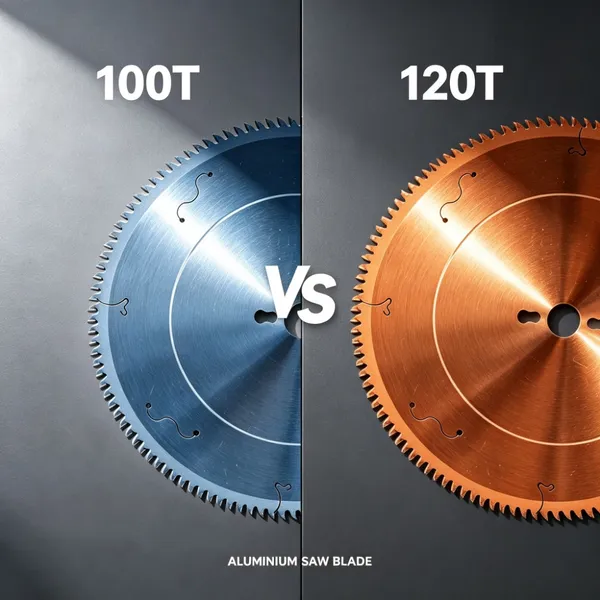 Read More
 -
Why Choose 254mm 100T TCG 75Cr1 Saw Blade for Wood Fine Cutting?
June 10, 2026Every woodworker knows that fine cutting is the key to finishing high-quality woodworks. A poor saw blade will cause rough edges,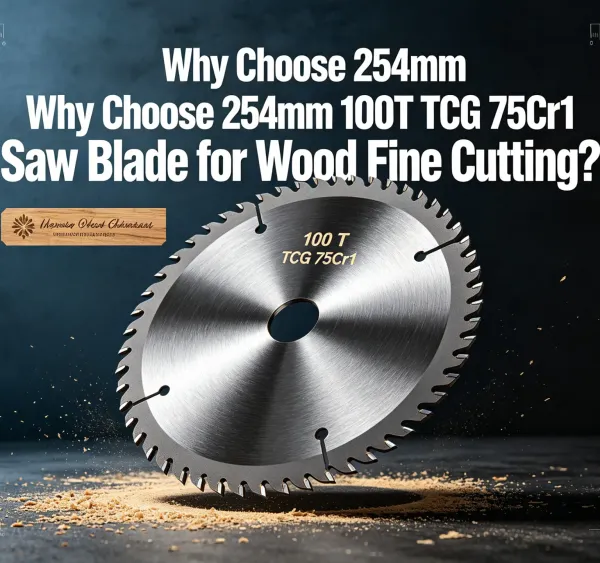 Read More
 -
254mm 100T TCG 75Cr1 Woodworking Blade: Ideal Choice for Wood Fine Cutting
June 10, 2026When it comes to high-precision wood processing, selecting a qualified saw blade directly determines cutting quality, production e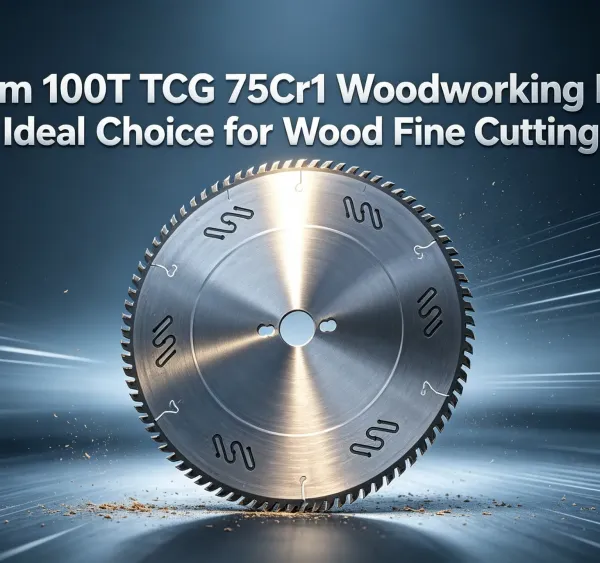 Read More

Contact Us
Recommended Products
-
 75Cr1 Panel Saw Blade 180mm 48T ATB for Wood Panel Cutting for FurnitureNegotiableMOQ: 100 Pieces
 -
Woodworking Blade 350mm 60T TCG 75Cr1 for Panel Saw for Furniture ManufacturingNegotiableMOQ: 100 Pieces
-
Precision Cutting Blade 300mm With 96T TCG Teeth for Fine Panel Cutting for Cabinet MakingNegotiableMOQ: 100 Pieces
-
Industrial Saw Blade 450mm 80T TCG 75Cr1 for Panel Cutting for Furniture ManufacturingNegotiableMOQ: 100 Pieces
-
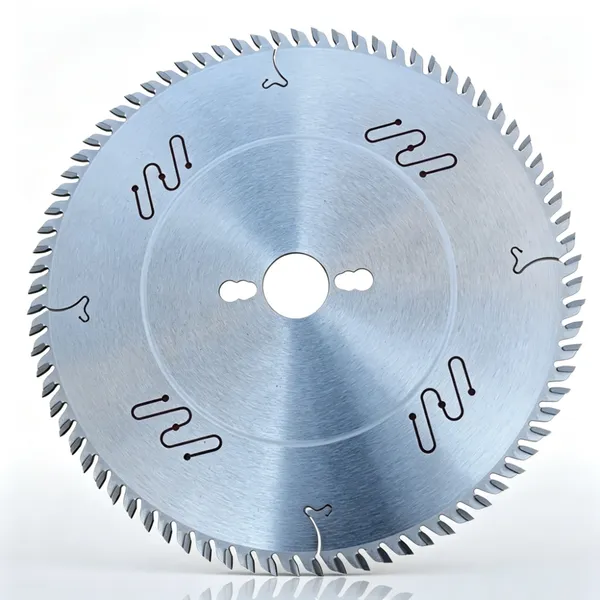
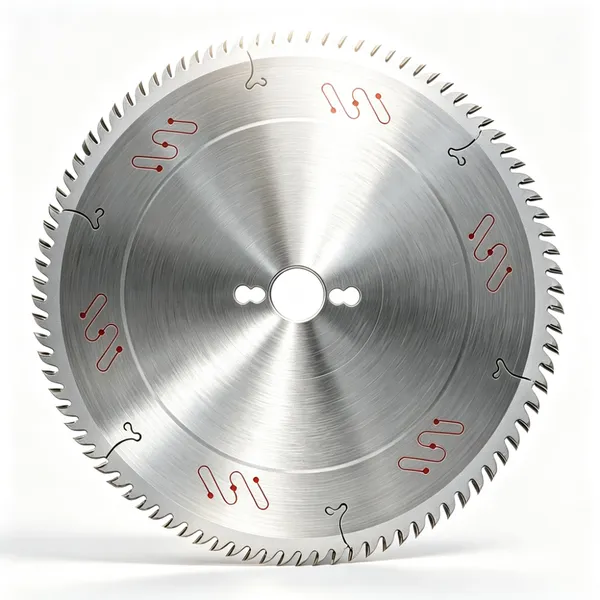
Laminated Board Cutting Blade 254mm 120T TCG 75Cr1 for Furniture ManufacturingNegotiableMOQ: 100 Pieces
-
230mm 40T ATB Rip Saw Blade for Solid Wood Cutting for Furniture 75Cr1NegotiableMOQ: 100 Pieces
-
Precision Saw Blade 254mm With 80T TCG Teeth for Plywood Cutting for Cabinet MakingNegotiableMOQ: 100 Pieces
-
75Cr1 Fine Cutting Blade 305mm 120T TCG for Panel Saw for FurnitureNegotiableMOQ: 100 Pieces
-
Melamine Board Blade for Panel Cutting 305mm 100T TCG 75Cr1 for FurnitureNegotiableMOQ: 100 Pieces
-
Woodworking Saw Blade 400mm With 100T TCG Teeth for Fine Panel Cutting for Cabinet MakingNegotiableMOQ: 100 Pieces
-
Cutting Saw Blade 350mm 60T TCG 75Cr1 for Panel Cutting for WoodworkingNegotiableMOQ: 100 Pieces
-
350mm 72T TCG Fine Cutting Blade for Panel Saw for Cabinet Making 75Cr1NegotiableMOQ: 100 Pieces
-
Panel Saw Blade for Wood Cutting 250mm 60T TCG 75Cr1 for MDF Crosscutting for WoodworkingNegotiableMOQ: 100 Pieces
-
Precision Wood Saw Blade 300mm 120T TCG for Fine Panel Crosscutting for Cabinet MakingNegotiableMOQ: 100 Pieces
-
75Cr1 Wood Ripping Saw Blade 250mm 40T ATB for Solid Wood Rip Cutting for Timber ProcessingNegotiableMOQ: 100 Pieces
-
300mm 80T TCG Wood Saw Blade for Melamine Faced Board Cutting 75Cr1NegotiableMOQ: 100 Pieces
-
Plywood Saw Blade 300mm 60T TCG 75Cr1 for Woodworking Panel CrosscuttingNegotiableMOQ: 100 Pieces
-
75Cr1 Saw Blade 250mm 100T TP for Plywood Cutting - AOMJNGNegotiableMOQ: 100 Pieces
-
75Cr1 Panel Saw Blade 400mm 120T TP for Plywood Cutting - AOMJNGNegotiableMOQ: 100 Pieces
-
Cutting Saw Blade for Plywood No-spec HSS for Woodworking & FurnitureNegotiableMOQ: 100 Pieces